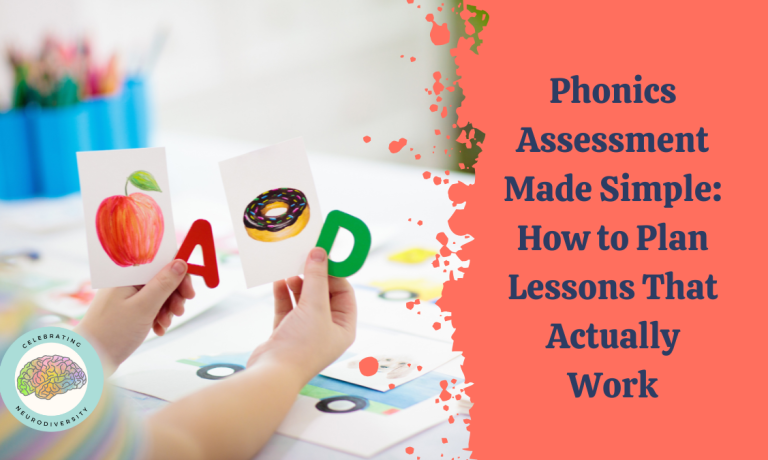
If you’ve ever looked at a stack of assessment data and thought, “Okay… now what?” you’re not alone.
Most teachers have plenty of reading data, but far fewer feel confident using that data to plan intentional phonics instruction. This is especially true when you’re working with struggling readers.
Here’s the good news: You don’t need more assessments; you just need the right ones and a clear purpose.
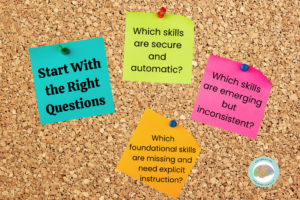
Start With the Right Question
Before choosing a lesson or pulling a resource, it’s important to pause and ask one essential question: What does this student know and what is not yet automatic?
Phonics assessment is not about assigning a level or placing a label on a student. Instead, it’s about gaining clarity around a student’s current skill set so instruction can be intentional and effective. Phonics assessment helps you determine:
- Which skills are secure and automatic?
- Which skills are emerging but inconsistent?
- Which foundational skills are missing and need explicit instruction?
When instruction begins without this level of clarity, we often waste valuable time reteaching skills students already have or moving forward without addressing critical gaps. In both cases, progress slows.
Using Benchmark Data Through a Phonics Lens
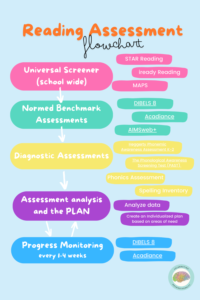
Benchmark assessments such as DIBELS or Acadience help narrow our instructional focus by measuring skills closely connected to phonics, including:
- Letter–sound knowledge
- Decoding accuracy and fluency
- Word reading fluency
When reviewing this data, it’s important to look beyond the composite score and ask more intentional questions:
- Is the primary concern?
- Are errors consistent or more random?
- Do the mistakes suggest decoding weaknesses rather than comprehension or language issues?
Answering these questions provides clues about where breakdowns may be occurring. However, while benchmark data tells us that a student is struggling with phonics-related skills, it still doesn’t tell us exactly which phonics skills to teach next. That level of clarity comes from diagnostic assessments, which allow us to pinpoint specific gaps and plan instruction with confidence.
If you’d like a deeper dive into how universal screeners, benchmark assessments, and diagnostics work together, I walk through that full process in this post: Mastering Reading Assessments: How to Identify and Provide Reading Support.
A Note About Phonological Awareness
Before moving on, it’s important to acknowledge the role of phonological and phonemic awareness. Difficulties in phonics often stem from weaknesses in a student’s ability to hear, segment, and manipulate sounds in spoken words. Strengthening the foundation first allows phonics instruction to be more efficient and effective.
Because phonological awareness plays such a critical role in reading development, I’ve dedicated separate, in-depth blog posts to both assessing and teaching these skills.
What Is Phonological Awareness and Why Is It Essential for Reading Success?
How to Assess and Act on Phonological Awareness Gaps: A Guide for Teachers
Phonics Screeners and Spelling Inventories: Finding the Instructional Starting Point
Once we know if a student needs phonics instruction, we can use phonics-specific assessments and spelling inventories to pinpoint exactly where instruction should begin. These assessments give us clarity on which phonics skills are secure, emerging, or missing altogether.
Phonics assessments are most effective when they examine both decoding (reading) and encoding (spelling). A student may appear successful when reading words in isolation, yet spelling often reveals gaps in sound–symbol knowledge that reading alone can mask. By looking at both, educators gain a much clearer picture of a student’s true level of phonics mastery.
Below are several phonics assessment tools that can help guide instructional planning:
- CORE Phonics Survey
This assessment measures a student’s knowledge of letter names, letter sounds, and word-level decoding across a progression of phonics skills. - UFLI Foundations Intervention Placement Test
This assessment also measures a student’s knowledge of word-level decoding across a progression of phonics skills that aligns with the progression in the UFLI Foundations program. - Spelling Inventories
Spelling inventories provide insight into a student’s phonological and orthographic knowledge. By analyzing spelling errors, teachers can identify which spelling features a student is using correctly and which patterns are not yet understood.
Using these tools allows us to move from general concerns to specific instructional decisions. When phonics assessment is intentional and targeted, it becomes a powerful planning tool that helps teachers meet students exactly where they are and design instruction that leads to meaningful progress.
Analyzing Data to Choose a Starting Point
The purpose of phonics assessments is to identify the most efficient place to begin instruction so students experience success quickly and build momentum.
A helpful way to organize your data is to sort skills into three categories:
- Skills that are secure and automatic
- Skills that are partially secure but inconsistent
- The earliest missing prerequisite skills
The missing prerequisite skills are often the most important, as we need to build a strong foundation. Instruction should begin where success is most likely, NOT a grade level or where the class is in the curriculum. When instruction starts too far ahead of a student’s foundational skills, progress slows and frustration increases. Starting at the right point allows students to solidify core skills and move forward with confidence.
Why Scope and Sequence Matters
Structured literacy instruction follows a deliberate progression of skills from easier to more complex. While not every program uses the same scope and sequence, they all share the same underlying philosophy:
Students must master foundational skills before more advanced patterns.
For example, a typical structured literacy progression might look like:
- Letter–sound correspondences before decoding words
- CVC words before words with blends
- Short vowels before long vowels and vowel teams
- Single-syllable decoding before multisyllabic words
- Basic spelling patterns before more complex orthographic rules
If a student struggles with decoding words containing blends, assessment data may reveal that the real issue is incomplete mastery of short vowel sounds or difficulty blending phonemes smoothly. In that case, instruction should step back to reinforce those earlier skills before moving forward.
Let Data Lead
Scope and sequence provide the roadmap, but assessment data tells you where to enter the road. Use the sequence of the program you’re teaching to guide instruction, but let student data drive your decisions.
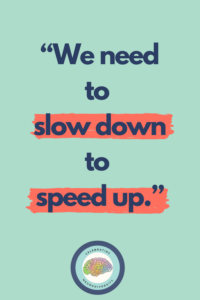
Starting at the right instructional point doesn’t mean slowing students down. It means giving them the solid foundation they need to move forward faster.
Phonics assessment doesn’t end once instruction begins. Just as the initial data helps determine a starting point, ongoing progress monitoring ensures that instruction is working and tells us when adjustments are needed.
Teachers can use brief, targeted checks every 1–4 weeks to answer key questions:
- Is the student becoming more accurate with the targeted phonics skills?
- Is the student showing increased automaticity when reading and spelling?
- Is there evidence that skills are transferring to connected text?
Many structured literacy programs include built-in progress monitoring tools designed to measure mastery of the specific phonics skills being taught. These assessments can be especially helpful for tracking growth on targeted patterns and confirming when a student is ready to move forward in the scope and sequence.
In addition, assessments such as DIBELS and Acadience offer progress monitoring measures that provide valuable insight into automaticity and skill transfer.
Progress monitoring data should be used to inform instructional decisions, not simply document progress. If a student is responding well, instruction can continue as planned. If progress is limited, this is a signal to slow down, increase practice, or revisit prerequisite skills rather than pushing forward in the sequence.
Conclusion: Using Data to Teach With Confidence
Phonics assessment is not about assigning levels or collecting more data; it’s about gaining clarity. When teachers understand what students know, what skills are developing, and what foundational pieces are missing, instruction becomes more intentional and effective.
By starting at the right instructional point, following a structured scope and sequence, and adjusting instruction based on progress monitoring, teachers can create phonics lessons that are efficient, targeted, and supportive. This approach helps students build confidence, strengthen foundational skills, and make meaningful progress that carries over into real reading.
Additional Resources
If you’d like to explore any of these topics more deeply, the following resources may be helpful as you continue building an assessment-to-instruction plan:
Structured Literacy & Phonics
- CORE Phonics Survey
- UFLI Foundations Intervention Placement Test
- Spelling inventories for analyzing phonological and orthographic development
Progress Monitoring
- DIBELS progress monitoring assessments
- Acadience progress monitoring assessments
These tools can help track growth in accuracy, automaticity, and skill transfer to connected text.